
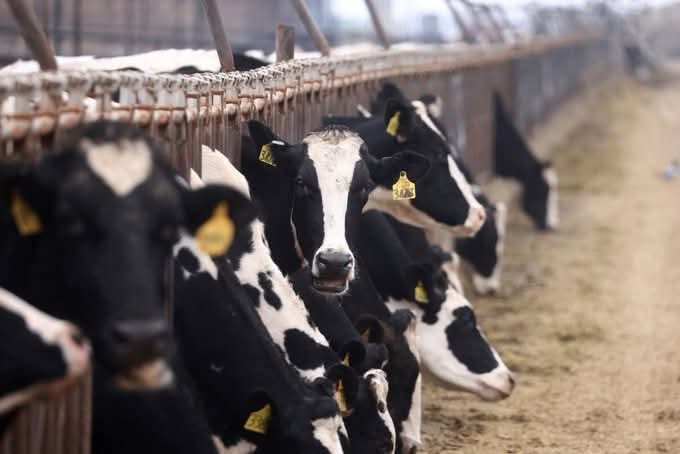
The Federal Government has unveiled plans to import high-yield dairy cattle from Denmark as part of a comprehensive national strategy to boost local milk production and drastically cut the country’s reliance on dairy imports, which currently cost Nigeria an estimated $1.5 billion annually.
The initiative, spearheaded by the Federal Ministry of Agriculture and Food Security, aims to enhance the productivity of Nigeria’s dairy sector by introducing superior cattle breeds known for higher milk yields and better adaptation to structured dairy farming systems. Officials say the move will support efforts to build a more self-reliant agro-economy while addressing nutritional needs across the country.
According to government sources, negotiations with Danish agricultural and livestock firms are already at an advanced stage, with initial batches of dairy cattle expected to arrive before the end of the year. The cattle will be distributed to selected large-scale dairy farms and livestock research centres across key dairy-producing states under a public-private partnership (PPP) model.
“The objective is not only to reduce our dairy import bill but also to create a thriving domestic dairy value chain that generates employment, supports smallholder farmers, and ensures food security,” a senior agriculture ministry official told The Economic Times.
Nigeria currently imports the bulk of its dairy products—including milk powder, cheese, and yoghurt—from Europe and Asia due to insufficient local production. Experts say the import dependence contributes to the country’s trade imbalance and exposes it to price shocks in the global market.
Denmark is recognized globally for its expertise in dairy farming and livestock genetics. By tapping into this expertise, the Nigerian government hopes to bridge the gap between local supply and demand, while also promoting technology transfer, training, and capacity building for Nigerian farmers and veterinary professionals.
Agricultural stakeholders have welcomed the move, but urged the government to pair the cattle importation with sustained investment in pasture development, cold chain infrastructure, veterinary services, and farmer education to ensure the success and sustainability of the initiative.
The dairy import substitution plan aligns with President Bola Ahmed Tinubu’s broader agricultural transformation agenda, which places a premium on boosting local production, ensuring food sufficiency, and creating rural-based economic opportunities.
The Economic Times
For Advert Call This Number+2348032077835
Domin samun sauran shirye-shiryen Alfijir labarai/Alfijir news ku shiga nan 👇
https://twitter.com/Musabestseller?s=09
https://www.facebook.com/profile.php?id=100089640289165
https://www.threads.net/@alfijirlabarai
https://www.youtube.com/@BestsellerChannel12
https://www.instagram.com/musa_bestseller?utm_source=qr&r=nametag
Alfijir labarai Alfijir News Whatsapp Group 👇👇
https://chat.whatsapp.com/KoLt2IMlnQfJPP6zN